Commentary: Restoring Tribal Sovereignty in Alaska
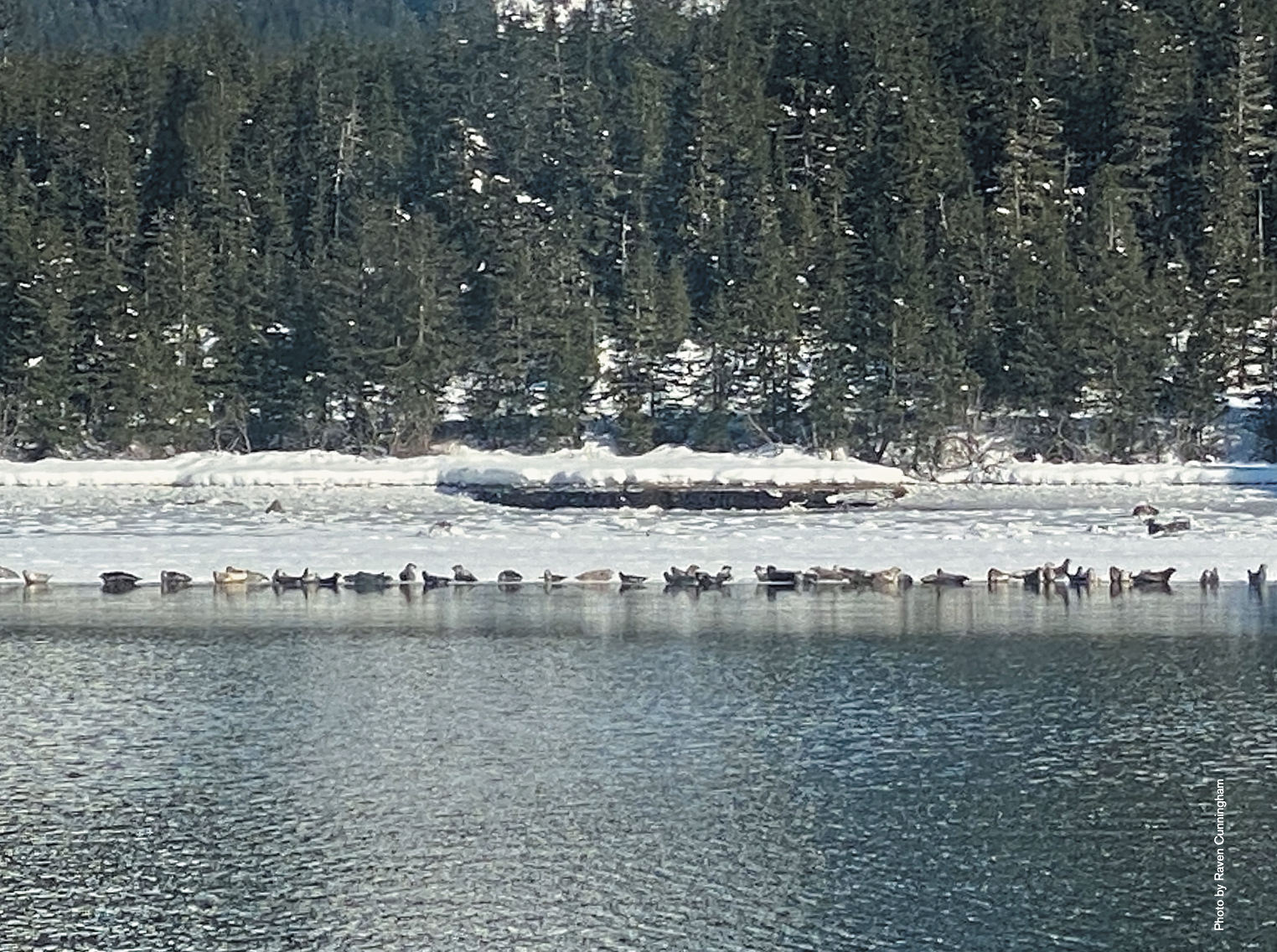
Photo by Raven Cunningham.
This commentary essay was originally published in the journal Environment: Science and Policy for Sustainable Development on February 24, 2026. View this article and photos at https://www.tandfonline.com/doi/epdf/10.1080/00139157.2026.2601500?needAccess=true.
Restoring Tribal Sovereignty in Alaska
by James Caggaq Nicori, Raven Cunningham, Martin Andrew, Terese Vicente, and Henry P. Huntington
For millennia, Alaska Native Peoples have governed their own use of their environment, ensuring sustainable abundance and fully aware of the impacts of overuse. However, over the past century, environmental management systems have been imposed by federal, territorial, and then state governments. These systems have typically started as a way to manage fishing, hunting, and other natural resource uses by newcomers. The first hunting regulations addressed sport hunting in southern Alaska, while the first fishing regulations dealt with commercial operations. Today, nearly every aspect of fish and wildlife use is regulated, along with access to lands and waters across the state.
This regulatory environment focuses primarily on the individual as the unit of management. In contrast, the traditional practices of Native Peoples are rooted in community needs and intergenerational caretaking. Skilled and capable fishers and hunters provide not only for themselves and their immediate families, but also those in the broader community and beyond. This includes Elders, widows, families that do not have the ability or time to hunt, and those with disabilities. Coastal and lower river Tribes consider the needs of those upriver, allowing most salmon to pass by rather than trying to catch as many as possible. Moose are taken for food and also when needed for memorial potlatches, honoring a person’s connection to the community and beyond.
While some accommodation for cultural practices has been incorporated into fisheries and wildlife management in recent years, Tribal governments in Alaska are still typically treated as just one of many stakeholders, rather than as sovereign governments with the inherent right to handle their own affairs. As a result, Tribes face a steady erosion of their ability to sustain their traditional ways and to continue their practices that have long ensured successful ecological balance and community well-being over time.
Given these challenges, it is not surprising that many Tribes and Tribal organizations are actively working to restore Tribal sovereignty over their hunting, fishing, and gathering rights. An early and partially successful step in this direction has been the development of co-management systems. Many examples have been established through the co-management of marine mammals under the Marine Mammal Protection Act (MMPA). Under federal law, marine mammals can only be hunted by Alaska Natives, thereby reducing conflicts over allocation and access. Co-management organizations play a critical role in conservation efforts, research, and harvest management, creating a framework for Tribes and hunters to have a voice in resource management.
While co-management provides a way for Tribes and hunters to be involved in managing these resources, it is still only one step toward true Tribal sovereignty. In most cases decision-making authority ultimately rests with federal and state agencies, leaving Tribes and hunters in advisory roles rather than as primary decision-makers. This is not to dismiss the substantial accomplishments of co-management organizations, but simply to note that they are a partial solution rather than the restoration of true Tribal sovereignty.
True Tribal sovereignty, in contrast, would mean that Tribes have full autonomy and authority over decisions regarding hunting, fishing, and resource management, without needing approval from, or facing the possibility of being overruled by, external entities. This authority comes with responsibility to ensure sustainable management, just as Native Peoples have done for generations. Across Alaska, Tribes are pursuing efforts to reclaim this sovereignty. From developing Tribal fish and game codes to establishing Tribally led research initiatives and enforcement programs, these efforts represent meaningful steps toward self-determination. Two examples illustrate how Tribes are working to restore their rightful role as stewards of their lands and waters.
*****
In the Chugach region of southcentral Alaska, marine mammals have long been central to the relationship that Sugpiat and dAXunhyuu communities have with their environment. Colonialist disruptions and legal barriers have created obstacles to traditional practices. These obstacles include restrictive, outdated, and inconsistent interpretations of Alaska Native identity, preventing many Tribal members from exercising their cultural and legal rights to hunt marine mammals. If this were not enough, environmental change and impacts from commercial and industrial activity in Chugach region waters make effective stewardship all the more crucial.
Chugach Regional Resources Commission (CRRC), an inter-Tribal organization dedicated to natural resource management and the protection of Tribal culture, has responded to these needs. CRRC works on behalf of Chenega, Eyak, Nanwalek, Port Graham, Tatitlek, Qutekcak, and Valdez Native, Tribes that have long thrived from the lower Copper River across Prince William Sound to the lower Kenai Peninsula. In 2021, CRRC launched its Marine Mammal Program to strengthen resilience and self-determination. Guided by a two-eyed seeing approach, the program weaves together wisdom of the Elders with contemporary science. Building on this foundation, CRRC introduced the Chugach Imaq Initiative the following year.
Imaq, a Sugt’stun word meaning “the ocean and all its contents,” reflects the initiative’s broad vision. Its work is grounded in three guiding principles: accountability to Tribal concerns, cultural conservation and continuity, and the advancement of Tribal sovereignty. At its core, the Chugach Imaq Initiative seeks to protect Indigenous harvesting rights and to ensure the ocean’s ability to continue to sustain future generations of Tribal members.
To reach these goals, CRRC and its partners are filling critical research gaps with Indigenous-led biosampling and data collection, using methods that are both culturally respectful and scientifically sound. For example, surveys are scheduled so as not to conflict with traditional harvest times and to avoid culturally sensitive areas, and Tribal Elders are consulted alongside biologists when determining sampling locations or interpreting trends. Methods such as drone-based population counts and habitat mapping are paired with oral histories and Indigenous knowledge to ensure that research reflects both cultural priorities and ecological accuracy. Monitoring of marine mammal populations that follows these approaches provides a foundation for informed, adaptive conservation policies. This integrated approach fosters a deeper understanding of marine mammal behaviors, migration patterns, and the interconnectedness of ecosystems.
Equally important is community participation. By involving Tribal members directly in monitoring and research, the initiative strengthens conservation outcomes while reinforcing a sense of ownership and responsibility over local ecosystems. This approach empowers Tribes to become advocates for marine mammal protection, ensuring that conservation strategies reflect ecological imperatives and align with cultural needs.
The Native Village of Eyak (NVE), one of the seven Tribes represented by CRRC, provides a clear example of Tribal action. In eastern Prince William Sound, the Tribe observed an overabundance of sea otters. Sea otters had been heavily targeted for their lush fur by Russian traders beginning in the 1700s and were pushed to the brink of extinction by the end of the 19th century. The population had rebounded by the latter half of the 20th century, when the Exxon Valdez oil spill not only killed many otters but also led to the collapse of a pod of killer whales that once helped keep the sea otter population balanced. Without this natural check, sea otters increased again rapidly, consuming clams, crabs, and sea urchins at unsustainable rates. The result was the destruction of local clam and crab beds, disrupting the ecosystem as well as traditional shellfish harvests. Recognizing that the single-species, hands-off management approach was failing, the Native Village of Eyak stepped into this gap. By encouraging local hunters to restore balance, they adopted an ecosystem-based approach that considered the full marine system, including people. The effort has strengthened community awareness and local stewardship, and CRRC and NVE continue to monitor shellfish populations and harvesters’ experiences gathering shellfish.
Regionally, this kind of action-oriented leadership has laid the groundwork for a Tribally led harvest management plan for marine mammals. The plan emphasizes sustainability, food sovereignty, and respect for the natural world. It advances Indigenous-led harvest monitoring and community-based data oversight, ensuring that Tribal knowledge and priorities guide management decisions.
At the same time, CRRC understands that partnerships are vital. While Tribal sovereignty is the goal, CRRC also recognizes that federal, state, and other external collaborators play an important role in accomplishing the work ahead. At the same time, the Chugach Imaq Initiative makes clear that Tribal sovereignty requires more than an advisory role. Too often, external interests have taken precedence over Tribal needs in research and conservation. True co-production of knowledge must center Tribal leadership and decision-making authority, ensuring that Tribes are not only part of generating information but also leading the actions that follow. The ideal is a lasting relationship with non-Tribal partners that builds Tribal capacity and affirms Tribal leadership.
In this way, the Chugach Imaq Initiative is more than a program; it is a movement that upholds cultural continuity, strengthens marine conservation, and affirms Tribal sovereignty, ensuring ecosystems of abundance for generations to come.
*****
Farther west, the Kuskokwim River, whose name stems from a Yugtun word meaning “big, slow-moving thing,” meanders more than 700 miles from its headwaters in the Alaska Range to the shores of the Bering Sea. For millennia, annual returns of Pacific salmon have sustained the communities, cultures, and ecosystems of the Kuskokwim River watershed. If the Kuskokwim is the heart of this region, salmon—and in particular, Chinook and chum salmon—are the lifeblood. Jonathan Samuelson, who has ties to the communities of Georgetown, Bethel, and McGrath and is a lifelong Kuskokwim steward and Tribal advocate, described the connection:
“Neqa, ilaput-llu. In Yugtun, the general term for food is neqa, which is also the word for fish. Ilaput translates to all our relations. So if that is not how you view fish—food and kinship—then we come from different worlds. For us, we wouldn’t exist without salmon. On the river, we coexist, salmon and people. And it’s always been that way. We have this deep spiritual relationship that we have the obligation, but also the privilege, to maintain between fish and people.”
Kuskokwim Yup’ik, Deg Xitan, Dena’ina, and Upper Kuskokwim Athabascan communities have a ten-thousand-year-long track record of successful stewardship of salmon, centered on taking only what is needed to survive the winter; sharing harvests with Elders, widows, and those unable to be on the land and water; working together; and adhering to the wisdom of the Elders. James Caggaq Nicori, Elder and lifelong fisher from Kwethluk, explained how families and communities have long governed their catch:
“And we’d start collecting fish soon as they arrive, and we’d be doing that ‘til the ladies say they have enough Chinook salmon. The ladies were the ones that were really watching how much they’re putting away and they kept count. Every year, they do the same thing over and over. And they get to know where the line draws, filling up the smokehouse and telling us that we have enough.”
However, as in the Chugach region, colonialist fisheries management and commercialization have strengthened their grip on the Kuskokwim and its fish since the turn of the 20th century, threatening Alaska Native stewardship, traditions, and health, as well as the abundance of salmon.
Around 2010, Kuskokwim Chinook salmon returns collapsed. While this was not the first time Chinook salmon abundance declined, the lack of population recovery in subsequent years was unprecedented. Through 2015, management authority of subsistence—or customary and traditional—Chinook salmon fisheries bounced back and forth between state and federal agencies. Meanwhile, Tribal governments and fishers were left without a formalized say in the treatment of the fish and fisheries upon which they depended for survival.
The desire to establish a formal seat in Kuskokwim River fisheries management led to the creation of the Kuskokwim River Inter-Tribal Fish Commission (KRITFC) in 2015. For the last decade, KRITFC has worked to support the 33 federally recognized Tribes of the Kuskokwim River watershed in fisheries management, research and monitoring, and advocacy, guided by the Yupik and Dené values and knowledge of their ancestors as well as the best available western science. Tribal sovereignty in fisheries stewardship is central to KRITFC’s mission, as stated in the preamble of its constitution:
“We, the Tribes of the Kuskokwim River and its tributaries … recognize our responsibility and authority to exercise our inter-tribal treaty rights to act as stewards to our common traditional territories and resources. Since time immemorial, we have properly cared for the fishery resources of the Kuskokwim River Drainage … Founded on tribal unity, and striving for consensus, we form the Kuskokwim River Inter-Tribal Fisheries Commission for the health and well-being of our tribal members, our future generations, and all Alaskans who rely upon the health of the fisheries.”
This expression of Tribal sovereignty informed the memorandum of understanding (MOU) signed between KRITFC and U.S. Fish and Wildlife Service (FWS) in 2016 to co-manage federal Kuskokwim salmon fisheries. Among KRITFC’s agreements in the MOU is a commitment to create a Tribal in-season management team equitably representative of the lower, middle, and upper regions of the watershed, but with the fewest members possible. At first, this meant gathering the Kuskokwim Tribes each spring to elect three In-Season Managers, one for each region, to be joined by KRITFC’s Elder Advisors at the co-management table. By 2022, two more In-Season Manager seats were added to the team through unanimously supported Tribal resolutions to better represent the diversity of cultures, geographies, and population densities throughout the watershed. Now composed of five In-Season Managers and two Elder Advisors, KRITFC’s co-management team meets regularly with FWS while federal salmon management jurisdiction is in effect. These exercises of Tribal sovereignty in developing its salmon co-management team have created greater balance and equity in KRITFC’s governance, as well as in its partnership with FWS. Megan Leary, Tribal Commissioner for Napaimute and previous KRITFC In-Season Manager, expressed why this progress matters:
“With the Fish Commission, there are local people helping to make decisions and manage our resources. That’s the way it should be—because this River is our lifeline. When local people are at the table making management decisions, we hold ourselves accountable as stewards of the river, the resources, and the generations yet to come. We understand that the choices we make today must be the best decisions for the future of our salmon, our River, our children, and our grandchildren. When management decisions are made by people who do not live on this River or rely on its resources, those decisions may not reflect the long-term well-being of our People or the River. In 10 or 50 years, it won’t matter to them whether the choices they made were the best or the right ones—but it will matter to us.”
However, KRITFC’s vision for true Tribal sovereignty is not fully realized. The 2016 MOU “formalize[d] an agreement for substantive consultation between the Federal in-season manager and the [KRITFC]” for subsistence salmon fisheries occurring in federal waters of the Kuskokwim. In other words, in addition to the In-Season Managers, KRITFC on behalf of all the Kuskokwim Tribes has a formal role in the overall management of salmon and salmon fisheries across a large swath of the river basin. Although this is a substantial step forward, the agreement still makes clear that ultimate authority rests with the federal government, and not with the Tribes.
In practice, this meant that for many years, FWS Refuge Managers overruled KRITFC In-Season Managers’ input, Traditional Knowledge, and recommendations, merely meeting with KRITFC to check the “substantive consultation” box. This has changed in recent years, with FWS Refuge Managers more likely to defer to KRITFC’s decisions and weigh Traditional Knowledge equally with western scientific data. For instance, in 2024, one western scientific test fishery project recorded very low passage of Chinook salmon. Meanwhile, Traditional Knowledge of the KRITFC In-Season Management team and in-season harvest estimates indicated the Chinook salmon run, while not recovered, was stronger than in recent years. Weighing these holistic sources of information, the KRITFC and FWS co-management team leaned on the data from local Knowledge Holders and fishers and provided additional subsistence harvest opportunities for local, rural (primarily Alaska Native) residents. A postseason assessment of the 2024 Chinook salmon run size determined that although not fully recovered to historic abundance, the run was the second strongest on record since the 2010 crash, and the increased local subsistence opportunity was warranted.
Despite these steps to increase the centrality of Tribal Knowledge and voices in Kuskokwim fisheries decision-making, the co-management structure still rests in the federal agency’s authority. KRITFC’s guiding principle is that Indigenous sovereignty is the necessary ingredient to recover Kuskokwim salmon abundance. While the MOU and co-management structure are a significant and unprecedented step toward Tribal sovereignty in the Kuskokwim region—perhaps, in Alaska—the journey to achieving full sovereignty continues.
*****
Tribal sovereignty is an inherent right. Exercising Tribal sovereignty is more complicated, as the examples from CRRC and KRITFC show. Modern management of hunting and fishing has largely been carried out in Alaska with minimal regard for Tribal sovereignty, creating an entrenched system of practice that is resistant to change. Furthermore, Tribal capacity is still often insufficient to contend with state and federal agencies and their many full-time personnel engaged in the research, analysis, legal work, and other aspects of fish and game management.
At the same time, Tribes and Tribal members have deep experience and knowledge, as well as an existential need to remain part of an abundant and productive ecosystem. Tribal organizations in Alaska, such as CRRC and KRITFC, are asserting their rights and taking on the responsibility for effective stewardship of the resources they depend upon. Their commitment to and vision of Tribal sovereignty are essential to a future of cultural, social, and environmental well-being.
*****
James Caggaq Nicori is an Elder Advisor for and founding leader of the Kuskokwim River Inter-Tribal Fish Commission. Raven Cunningham is Director of the Office of Tribal Self-Governance, Native Village of Eyak. Martin Andrew is the Chair of the Kuskokwim River Inter-Tribal Fish Commission. Terese Vicente is the Policy and Programs Director for the Kuskokwim River Inter-Tribal Fish Commission. Henry P. Huntington is the Arctic Science Director for Ocean Conservancy.
To cite this article: James Caggaq Nicori, Raven Cunningham, Martin Andrew, Terese Vicente & Henry P. Huntington (2026) Restoring Tribal Sovereignty in Alaska, Environment: Science and Policy for Sustainable Development, 68:2, 48-54, DOI: 10.1080/00139157.2026.2601500.