Press Statement: Alaska Board of Fisheries Takes Only Small Step to Protect Migratory Salmon Corridor in Area M
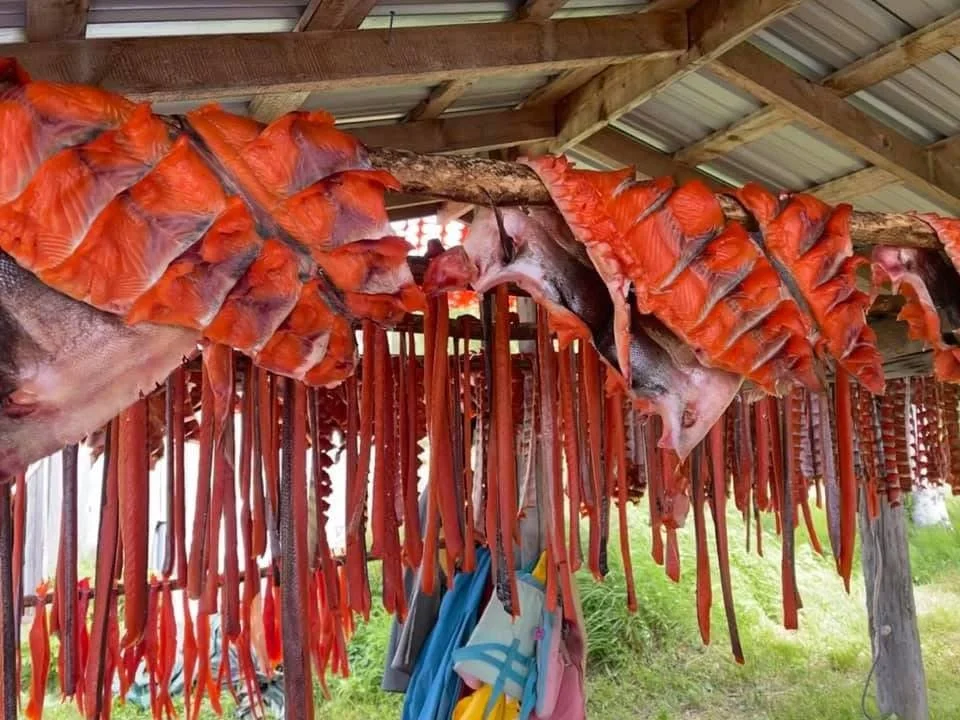
Photo by Kristyn Gregory-Ausda.
Download This Press STatement Here.
FOR IMMEDIATE RELEASE: February 26, 2026
ANCHORAGE, AK | Yesterday, the Alaska Board of Fisheries failed to take decisive action to protect a key migratory corridor for Western and Interior Alaska chum and Chinook salmon stocks by not instituting meaningful windows in the South Alaska Peninsula June commercial salmon fishery.
In a 4-3 vote, the Board amended language for Proposal 127 to alter the South Alaska Peninsula – or Area M – June commercial salmon fishery management plan to allow the Alaska Department of Fish & Game to issue up to three 24-hour openers per week for drift gillnet and purse seine vessels between June 10 and June 28. The new plan, which will take effect in 2026, reduces fishing time for these vessels by about 39% and 30%, respectively, from the 2023-2025 plan. It also removes the chum salmon triggers for seine fleet closures adopted in 2023.
Though Western and Interior Alaska Tribal organizations submitted support for the first amendments to Proposal 127 found in Record Copy 245, the adopted plan does not have the extensive fishing closures necessary for strong protection of migratory salmon. The suite of proposals originally supported would have closed the Area M commercial salmon fishery for 10 days up to the entire month of June to remove nets from the water during the peak passage of declined Western Alaska salmon stocks.
“This isn’t a step backward, but it is not the leap forward that our Tribes asked for and that our salmon desperately need,” said Martin Andrew, Chair of the Kuskokwim River Inter-Tribal Fish Commission. “Our people are in the midst of a humanitarian crisis because of the lack of salmon in our smokehouses. We are hopeful the Board’s action to limit Area M fisheries will help rebuild our salmon.”
“This action will not resolve the crisis overnight, but it is an important step in the right direction,” said Brian Ridley, Chief/Chairman of Tanana Chiefs Conference. “Yukon River families have made real sacrifices to conserve these salmon, and we appreciate the Board recognizing its responsibility to prioritize subsistence. We are grateful to our Tribal partners and advocates across Alaska who worked together to make this possible, and we look forward to continuing this work so future generations can once again depend on salmon.”
"BBNA supports conservation-first management because fish and wildlife are vital to our people, our culture, and our food security. We stand in unity with Alaska’s Tribes and our Tribal partners to protect salmon and the communities and ways of life they sustain for generations to come,” said Dan Breedan, President and CEO of Bristol Bay Native Association.
"The Board's decision acknowledges that change is needed but falls short of what our salmon and our people need. For our Tribes, salmon is not a commodity. They are our identify, our culture, our food, and Our Way of Life," says Association of Village Council Presidents CEO, Vivian Korthuis. "Management must abide by subsistence priorities, and reflect the protection of our salmon and our people as a responsibility, for now and for our next generation."
“Every salmon matters as we work together to preserve Our Ways of Life,” says Melanie Bahnke, Kawerak President. “Thank you to all the testifiers and advocates across the state who shared their story and relationship to Salmon at the recent BOF meeting. There are many factors that impact our fish that we can’t control, it’s important to work together to affect the ones we can.”
"In-river communities have borne the entire brunt of conservation efforts and disproportionately sacrificed harvest," stated Craig Chythlook, Executive Director of the Yukon River Inter-Tribal Fish Commission. "For too long, in-river management has failed to rebuild Yukon salmon runs. Protecting the state subsistence priority is ultimately in the best interest of everyone who depends on salmon, and the burden of conservation must not fall solely on those living along the river."
Additionally, in a 4-3 vote, the Board adopted amended language for Proposal 135 that requires Chinook salmon over 28” caught in Area M to be released to the water unharmed. Significant testimony and data put forward by Tribes and Tribal organizations from Western Alaska about the high mortality levels of salmon released from purse seines and gillnets – as well as about the critical need for accurate documentation of how many salmon are harvested in Area M – was ignored in this vote.
Our organizations continue to stand with our Western Alaska Tribes to fight for gravel-to-gravel stewardship of our salmon and protections of our Alaska Native Ways of Life.
*****
The Kuskokwim River Inter-Tribal Fish Commission (KRITFC) is a 501(c)3 non-profit that works to support the interests of the 33 Federally recognized Tribes of the Kuskokwim River watershed in fisheries management, research, and monitoring. Our gravel-to-gravel approach to salmon stewardship is guided by Alaska Native knowledge and values as well as the best available Western science.
Tanana Chiefs Conference (TCC) is a Tribal consortium serving 42 federally recognized Tribes across Interior Alaska. TCC works to support the health, well-being, and self-determination of Alaska Native people and advocates for the protection of subsistence resources vital to Tribal communities across a 235,000-square-mile region. Learn more at www.tananachiefs.org.
The mission of Bristol Bay Native Association (BBNA) is to maintain and promote a strong regional organization supported by the Tribes of Bristol Bay to serve as a unified voice to provide social, economic, cultural, and educational opportunities and initiatives to benefit the Tribes and the Native people of Bristol Bay.
The Association of Village Council Presidents (AVCP) is a regional non-profit tribal consortium comprising 56 federally recognized tribes of the Yukon-Kuskokwim Delta. AVCP’s region is approximately 55,000 square miles, with a population of 27,000 residing in 48 communities along the Yukon River, Kuskokwim River, and Bering Sea coast. The residents of the region are primarily Yup’ik, Cup’ik, and Athabascan. AVCP is dedicated to supporting the interests of its member tribes, including through community development, education, social services, culturally relevant programs, and advocacy. AVCP promotes self-determination and protection and enhancement of cultural and traditional values. As part of its mission, AVCP has long been committed to advocating for the protection of the Bering Sea and its resources.
Kawerak Inc. is a nonprofit tribal consortium that provides over 40 different programs to the Inupiaq, St. Lawrence Island Yupik and Yup’ik people who reside in 16 communities of western Alaska and represents the 20 federally recognized tribes in the Bering Strait Region.
The Yukon River Inter-Tribal Fish Commission (YRITFC) is a 501(c)3 nonprofit organization charged with representing 44 member Tribal Governments and First Nations of the Yukon River watershed in fisheries management. Founded on Tribal unity, the YRITFC works across jurisdictional and geographic boundaries to maintain our traditional way of life, to protect the health and well-being of all those who rely upon the health of the fish, and ensure wild salmon for generations to come. The YRITFC weaves time-tested Indigenous knowledge and stewardship techniques with the best available Western science to promote a real gravel-to-gravel approach to rebuilding our stocks and in our pursuit of establishing co-management on the Yukon River.