Kuskokwim River Federal Public Waters Closed to Gillnets and the Harvest of Coho Salmon
Emergency Special Action No. 04-SS-26-03
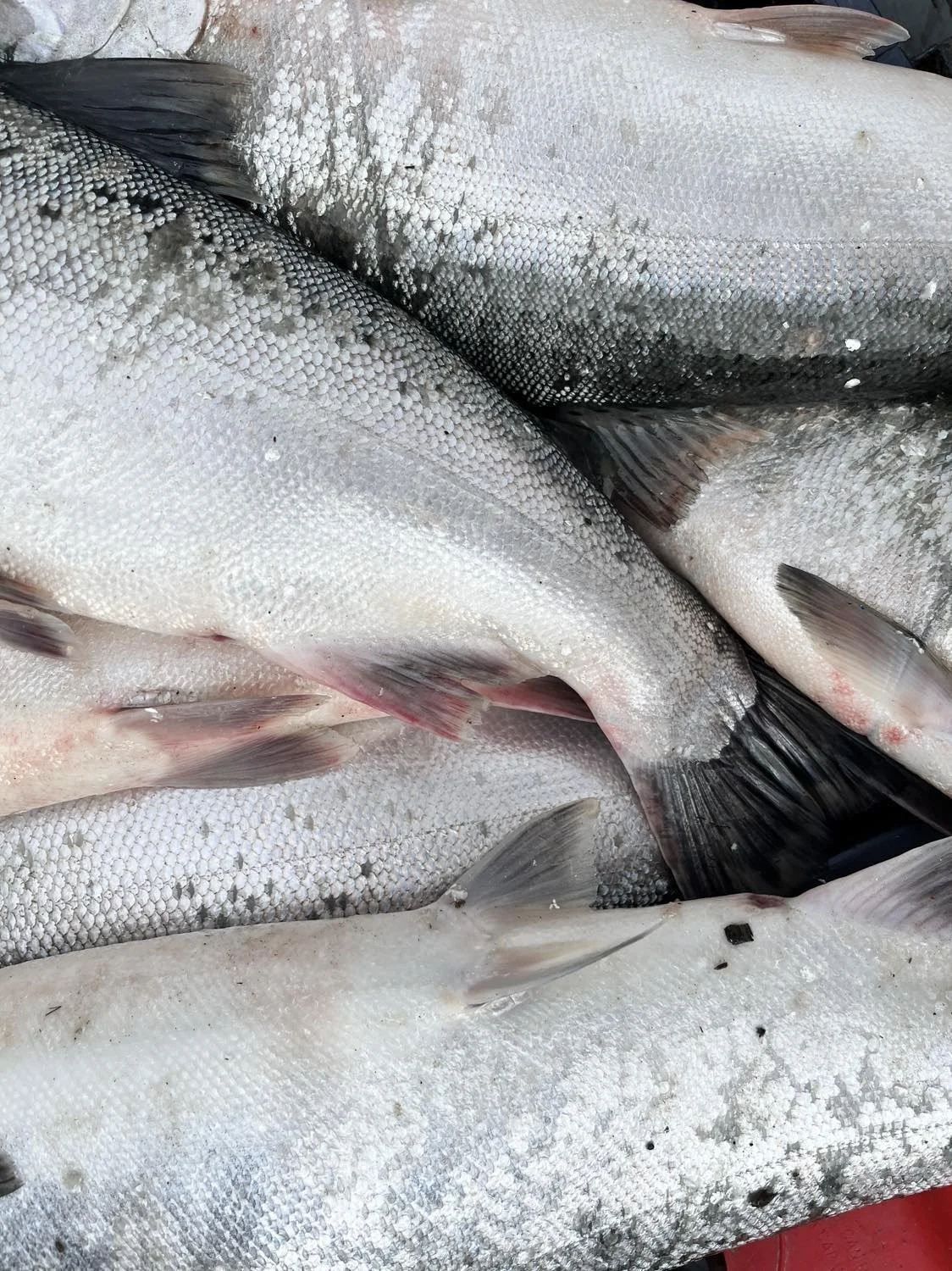
Photo: Terese Vicente/KRITFC
Issued at Bethel, AK August 11 2026
Effective Date: August 12, 2026, 5:00 PM
Expiration Date: September 15, 2026, 11:59 PM
EXPLANATION:
The Yukon Delta National Wildlife Refuge (YDNWR) Manager has determined that Federal management is necessary for conservation, and for the continuation of subsistence uses for coho salmon within the Federal public waters of the Kuskokwim River drainage (see maps in Appendix 1) due to low abundance. The Federal in-season manager will consider announcing gillnet fishing opportunities for federally qualified subsistence users after evaluating conservation needs and consultation with partners.
Beginning on August 12, 2026, the following restrictions will be in place:
REGULATION: 36 CFR 242.27(e)(4)(ii) and 43 CFR 51.27(e)(4)(ii) are amended to read:
(A) Unless re-opened by the YDNWR Manager, the following Federal public waters of the Kuskokwim River within and adjacent to the exterior boundaries of the Yukon Delta National Wildlife Refuge are closed to the use of gillnets and the harvest of coho salmon by all users from August 12, 2026 at 5:00 p.m. to September 15, 2026 at 11:59 p.m.:
The Kuskokwim River mainstem.
The Eek River.
The Kwethluk River drainage beginning at its confluence with Kuskokuak Slough.
The Kasigluk and Kisaralik River drainages including Old Kuskokuak Slough to ADF&G regulatory markers at the confluence of Old Kuskokuak Slough and Kuskokuak Slough.
The Tuluksak River drainage including its confluence with the Kuskokwim River and downstream approximately 1-mile to ADF&G regulatory markers.
The Aniak River drainage within the Yukon Delta NWR boundary (on the Aniak River, starting about 500 yards upstream of the Aniak / Kuskokwim rivers confluence up stream to near the Aniak / Buckstock rivers confluence).
The Aniak box defined as: The waters of the Kuskokwim River mainstem from the Yukon Delta NWR boundary at Aniak downstream to a line formed from the northwest corner of the runway (see map in Appendix 1; latitude 61° 35’ 16” N, longitude 159° 33’ 28” W), due north to a point on the southeast corner of the sandbar (latitude 61° 35’ 37” N, longitude 159° 33’ 16” W).
(B) Fishing from tributaries not listed above is restricted to fishing 100 yards upriver from the mouth of the tributary (confluence with the mainstem Kuskokwim River).
(C) For non-federally qualified users: The retention of coho salmon is not allowed within all Federal public waters. The retention of Chinook, Chum, Sockeye Salmon, and other non- salmon species utilizing means and methods other than a gillnet may be allowed/not allowed dependent on the State of Alaska fishing regulations. If beach seines can be used, they must meet the definition in (E) below.
(D) For federally qualified subsistence users: The use of dip nets, beach seines (see (E) below), fish wheels, and rod and reel will remain open throughout the closure within all Federal public waters. Retention of coho salmon is not allowed and retention of Chinook, Chum, Sockeye Salmon, and other non-salmon species is allowed.
(E) Beach seines are defined as non-monofilament webbing, 50 fathoms in length, 100 meshes in depth, and no greater than three and one-half inches stretched webbing.
JUSTIFICATION:
As of August 10, the cumulative number of coho salmon that passed the Kuskokwim River Sonar was 96,126 and near 50% of the run has likely passed the lower Kuskokwim River. This amount is comparable to years 2020 and 2022, which were the lowest sonar passages on record. Therefore, current Bethel Sonar estimates indicate that coho salmon escapement goals on the Kogrukluk and Kwethluk rivers, and the coho salmon amount reasonably necessary for subsistence, are unlikely to be achieved this year. Consequently, fishing restrictions are necessary to safeguard coho salmon returning to the Kuskokwim River. If the coho run improves, this federal action establishes the ability to provide limited fishing opportunities to federally qualified subsistence users thus providing a priority as required by Title VIII of the Alaska National Interest Lands Conservation Act (ANILCA).
Federal Subsistence Board by delegation to:
Spencer Rearden
Kuskokwim River In-season Manager
Yukon Delta National Wildlife Refuge
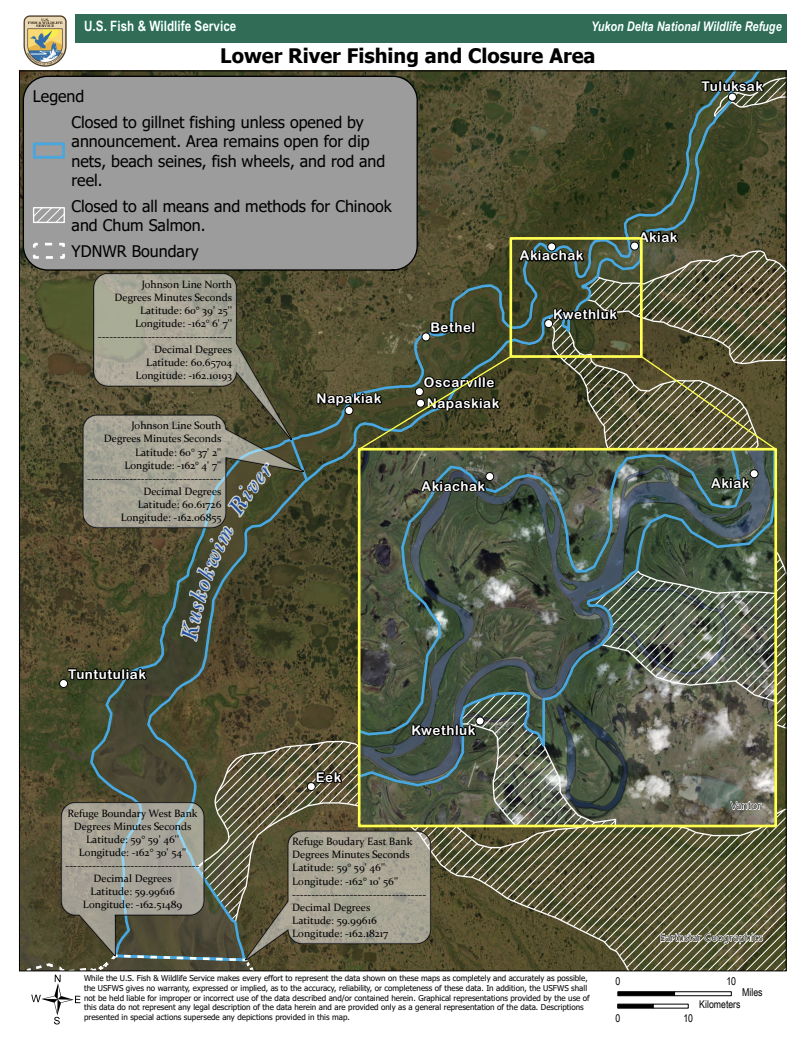
Map of Lower River Fishing and Closure Area
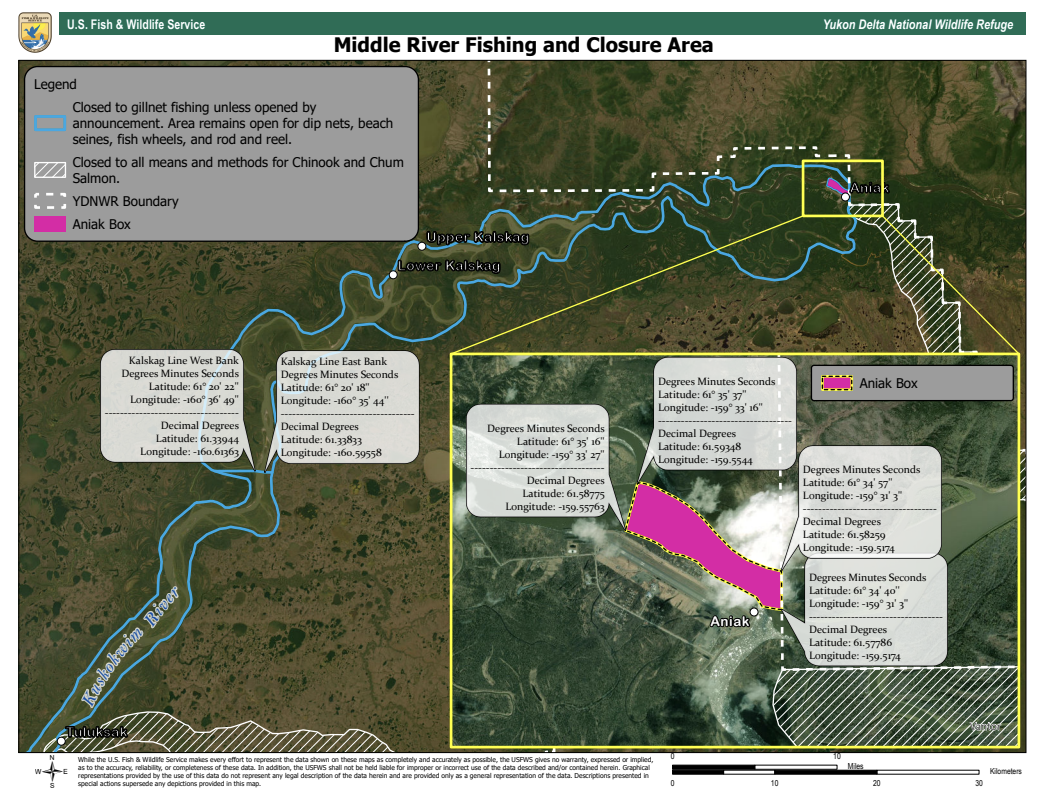
Map of Middle River Fishing and Closure Area.
DISTRIBUTION:
Anthony Christianson, Chair, Federal Subsistence Board
Jack Reakoff, Chair, Western Interior Subsistence Regional Advisory Council
Jacqueline Cleveland, Chair, Yukon-Kuskokwim Subsistence Regional Advisory Council
Sara Boario, Regional Director, Alaska Region, U.S. Fish and Wildlife Service
Jill Klein, Interagency Staff Committee
Crystal Leonetti, Office of Subsistence Management
Benjamin Mulligan, Deputy Commissioner, Alaska Department of Fish and Game
Sam Decker, Kuskokwim Area Management Biologist, Alaska Department of Fish and Game