Notice to Rescind Partial Federal Salmon Fishing Restrictions
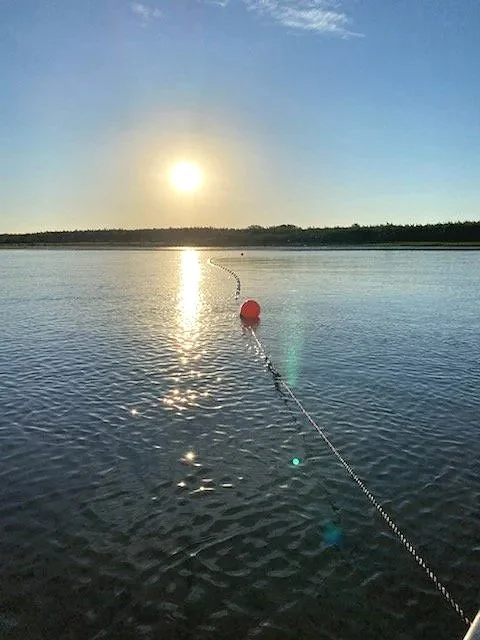
Photo by Beverly Hoffman.
Notice to Rescind Salmon Fishing Restrictions within Federal Public Waters of the Kuskokwim River Mainstem and to Rescind Restrictions on Chum Salmon
Temporary Special Action No: 04-KSCS-26-02
Issued at: Bethel, AK July 9, 2026
Effective Date: July 13, 2026, 12:00 PM
Expiration Date: July 31, 2026. 11:59 PM
Download this announcement as a PDF here.
EXPLANATION
This Temporary Special Action (04-KSCS-26-02) rescinds portions of the previous salmon fishing restrictions announced in Temporary Special Action- 04-KSCS-26-01 within the Kuskokwim River Drainage: Chum Salmon management within all Federal public waters, and Chinook Salmon management within the Kuskokwim River mainstem (not including tributaries), is now rescinded. Chinook Salmon restrictions will remain in place for only the tributaries within Federal public waters as stated below, which will expire July 31, 2026. The Yukon Delta National Wildlife Refuge (YDNWR) Manager, in partnership with the Kuskokwim River Inter-Tribal Fish Commission (KRITFC), determined that Federal management for the conservation of Chum Salmon is no longer needed in 2026 and that conservation of Chinook Salmon within the tributaries is still necessary.
This Temporary Special Action (04-KSCS-26-02) and the following regulatory language will supersede Temporary Special Action 04-KSCS-26-01:
REGULATION: 36 CFR 242.27(e)(4)(ii) and 43 CFR 51.27(e)(4)(ii) are amended to read:
(A) Unless re-opened by the YDNWR Manager, the following Federal public waters of the Kuskokwim River drainage within and adjacent to the exterior boundaries of the Yukon Delta National Wildlife Refuge are closed to the harvest of Chinook salmon by all users from July 13, 2026 at 12:00 p.m. to July 31, 2026 at 11:59 p.m.:
(1) The Eek River.
(2) The Kwethluk River drainage beginning at its confluence with Kuskokuak Slough.
(3) The Kasigluk and Kisaralik River drainages including Old Kuskokuak Slough to ADF&G regulatory markers at the confluence of Old Kuskokuak Slough and Kuskokuak Slough.
(4) The Tuluksak River drainage including its confluence with the Kuskokwim River and downstream approximately 1-mile to ADF&G regulatory markers.
(5) The Aniak River drainage within the Yukon Delta NWR boundary (on the Aniak River, starting about 500 yards upstream of the Aniak / Kuskokwim rivers confluence up stream to near the Aniak / Buckstock rivers confluence).
JUSTIFICATION:
About 90% of the Chinook Salmon run will be past the lower river by July 13, Sockeye Salmon are now in high abundance, and Chum Salmon estimates at the Kuskokwim River Sonar are the highest since 2018. However, conservation of Chinook Salmon is still likely needed on the tributaries where most of the Chinook Salmon are now found.
The closure of Federal public waters throughout the Kuskokwim River drainage to the use of gillnets and harvest of Chinook and Chum Salmon began on June 1, 2026. This decision was based on conservation concerns and to prioritize federally qualified subsistence users through the provisions of Title VIII of the Alaska National Interest Lands Conservation Act and delegation of authority letter from the Federal Subsistence Board. The YDNWR manager and the KRITFC announced limited fishing opportunities to balance the needs of conservation and subsistence users. Decisions were based on run-strength data and input from local subsistence users. As in recent years, subsistence needs were likely not fulfilled due to the relatively low abundance and restrictions.
DISTRIBUTION:
Anthony Christianson, Chair, Federal Subsistence Board
Jack Reakoff, Chair, Western Interior Subsistence Regional Advisory Council
Jacqueline Cleveland, Chair, Yukon-Kuskokwim Subsistence Regional Advisory Council
Sara Boario, Regional Director, Alaska Region, U.S. Fish and Wildlife Service
Jill Klein, Interagency Staff Committee
Crystal Leonetti, Office of Subsistence Management
Benjamin Mulligan, Deputy Commissioner, Alaska Department of Fish and Game
Sam Decker, Kuskokwim Area Management Biologist, Alaska Department of Fish and Game