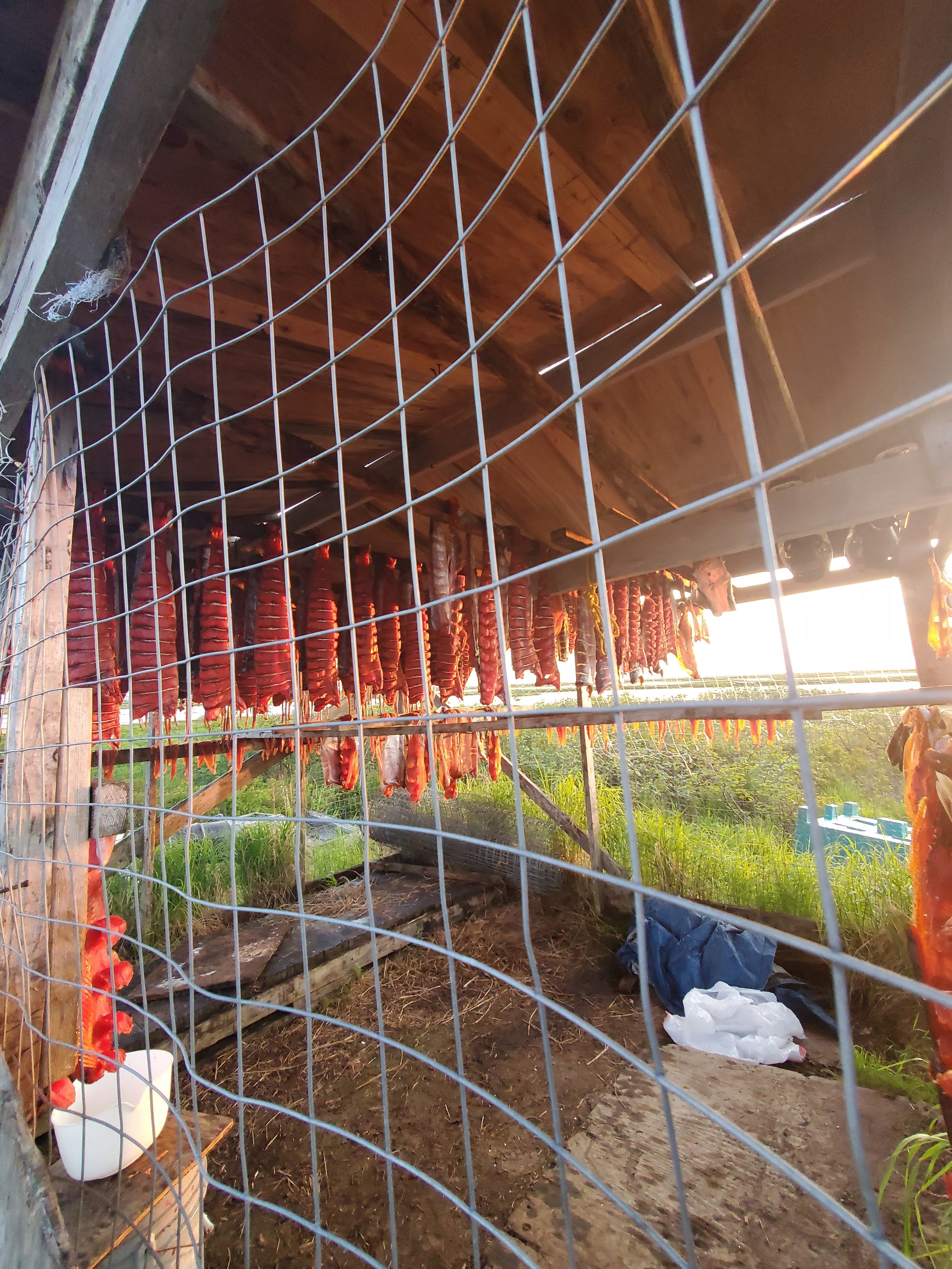
Photo: Courtesy of Nellie Parks
FOR IMMEDIATE RELEASE: MAY 21, 2026
Alaska Attorney General Refuses to Defend Board of Fisheries, Colludes with Area M and voids BOF regulations intended to protect Western Alaska salmon
Yesterday, the State Attorney General announced its action to void a set of February 2026 Alaska Board of Fisheries’ regulations to restrict the Area M fishery.
On April 3, 2026, Area M commercial fishing groups and the Aleutian East Borough filed a lawsuit seeking to nullify fishing restrictions adopted in February by the Board of Fisheries - alleging BOF members had undisclosed conflicts of interest. The regulations were a result of years of advocacy from communities across the Yukon, Kuskokwim, Bristol Bay, and Arctic regions who have experienced devastating salmon collapses.
“We strongly condemn Alaska’s Acting State Attorney General's decision to void duly adopted Alaska Board of Fisheries (BOF) regulations restricting Area M chum and Chinook salmon harvest - without publicly presenting evidence, legal findings, or allowing the court process to play out,” said Martin Andrew, Chair, Kuskokwim River Inter-Tribal Fish Commission.
“Our people are still suffering from the prolonged humanitarian crisis of the salmon crash. The momentum has been interrupted, and with this action, the window of hope is further diminishing. We have stood up for our region, but even so our efforts get silenced. The reality is, our rivers have no salmon— where does our region turn to now, to address these systemic inequities?” stated Vivian Korthuis, CEO of Association of Village Council Presidents.
“The restrictions represented the first meaningful reductions on Area M interceptions in more than two decades and were intended to return more salmon to Western Alaska river systems suffering from prolonged subsistence closures and fishery disasters, such as the failure to fulfill Yukon River treaty obligations to Canada,” said Chief Charlie Wright, Chair, Yukon River Inter Tribal Fish Commission.
Last week Bering Sea Fishermen’s Association (BSFA) filed a motion to intervene in the case, arguing that the Attorney General and their client ADFG was in collusion with Area M commercial fishing groups and that the Attorney General would not adequately represent the BOF or BSFA’s interests in actions to help protect Western Alaska salmon stocks migrating through Area M.
In response to the lawsuit by Area M commercial fishing groups, Attorney General had to choose whether to defend the BOF or to abandon the BOF and take action to support ADFG’s position.“Without awaiting the outcome of this litigation or providing legitimate justification, the AG’s office voided the BOF regulations, giving the Area M commercial fishing groups everything they asked for. By voiding the regulations and trying to dismiss the case, the Attorney General and ADF&G hopes that a court never gets to hear BSFA’s concerns or gets to weigh in on whether any board members had a conflict of interest that prevented them from voting,” Karen Gillis, Executive Director, Bering Sea Fishermen’s Association.
Alaskans deserve transparency, due process, and a fisheries management system that works for all Alaskans - not just the most politically powerful interests. This action by the acting Attorney general should be an alarm bell to all Alaskans who care about our fisheries. It represents a gross consolidation of power in which allocative decisions based on political interests were made over the sustainability of Western Alaska salmon. If allowed to stand, this action will be a unilateral change to fisheries management.
This action by the AG confirms that they cannot represent the BOF and that the judge must keep the case alive and allow BSFA, and possibly other affected groups, to continue to defend the regulations that were intended to put more fish in western Alaska rivers.
Association of Village Council Presidents (AVCP) is an Inter-Tribal non-profit consortium. Based in Bethel, Alaska and controlled by 56 federally recognized Tribes, AVCP provides human, social, and other culturally relevant services to our member Tribes located in villages throughout the Yukon-Kuskokwim Delta in an area of approximately 59,000 square miles. AVCP is fully committed to advocating for the protection of it’s resources.
Kuskokwim River Inter-Tribal Fish Commission (KRITFC) represents the interests of the 28 federally recognized Tribal Governments in the Kuskokwim region in fisheries assessment and sustainable fisheries management. Tribally appointed fish commissioners, Executive Council members and in-season managers combine Traditional Knowledge and other sciences to conservatively manage Kuskokwim fisheries according to Yupik and Athabascan Dene’ values. The values at the core of our work are social and environmental justice, equitable and sustainable salmon harvests throughout the watershed and unity as one fishing people along the Kuskokwim River.
Yukon River Inter-Tribal Fish Commission (YRITFC) was founded on tribal unity for the health and well- being of tribal members, future generations and all Alaskans and Canadians who rely on the health of the Yukon River fisheries. We are committed to conserving, restoring and providing for Tribal use of fisheries based on Indigenous Knowledge systems, scientific principles and sound management. We represent 44 federally recognized tribes along the Yukon River in Alaska, from Kotlik to Eagle.
Bering Sea Fishermen’s Association (BSFA). Since 1979, BSFA has worked to support healthy and vibrant fishing communities by fostering greater social, financial, and political capacity to access, sustainably develop and protect fisheries in the Bristol Bay, Arctic, Yukon and Kuskokwim (BBAYK) regions of Alaska. BSFA is committed to the sustainable management of Alaska’s resources and serves as a steward of the extraordinary ways of life and cultures of Alaskans. We work to strengthen local communities, support long-term ecological integrity, and stimulate robust economies. BSFA serves 128 communities in the BBAYK regions of Alaska where commercial fisheries and the ocean ecosystem are vital to the economic and cultural fabric of our lives.